The classical Markowitz's mean-variance portfolio formulation ignores heavy tails and skewness. High-order portfolios use higher order moments to better characterize the return distribution. Different formulations and fast algorithms are proposed for high-order portfolios based on the mean, variance, skewness, and kurtosis. The package is based on the papers: R. Zhou and D. P. Palomar (2021). "Solving High-Order Portfolios via Successive Convex Approximation Algorithms." <arXiv:2008.00863>. X. Wang, R. Zhou, J. Ying, and D. P. Palomar (2022). "Efficient and Scalable High-Order Portfolios Design via Parametric Skew-t Distribution." <arXiv:2206.02412>.
Calculate the injury severity score (ISS) based on the dictionary in ICDPIC from <https://ideas.repec.org/c/boc/bocode/s457028.html>. The original code was written in STATA 11'. The original STATA code was written by David Clark, Turner Osler and David Hahn. I implement the same logic for easier access. Ref: David E. Clark & Turner M. Osler & David R. Hahn, 2009. "ICDPIC: Stata module to provide methods for translating International Classification of Diseases (Ninth Revision) diagnosis codes into standard injury categories and/or scores," Statistical Software Components S457028, Boston College Department of Economics, revised 29 Oct 2010.
The ClusterSignificance package provides tools to assess if class clusters in dimensionality reduced data representations have a separation different from permuted data. The term class clusters here refers to, clusters of points representing known classes in the data. This is particularly useful to determine if a subset of the variables, e.g. genes in a specific pathway, alone can separate samples into these established classes. ClusterSignificance accomplishes this by, projecting all points onto a one dimensional line. Cluster separations are then scored and the probability of the seen separation being due to chance is evaluated using a permutation method.
Rapid is a Go library for property-based testing.
Rapid checks that properties you define hold for a large number of automatically generated test cases. If a failure is found, rapid automatically minimizes the failing test case before presenting it.
Features:
imperative Go API with type-safe data generation using generics
data generation biased to explore "small" values and edge cases more thoroughly
fully automatic minimization of failing test cases
persistence and automatic re-running of minimized failing test cases
support for state machine ("stateful" or "model-based") testing
no dependencies outside the Go standard library
You return to Earth with a vessel built from technology discovered from an ancient race called the Precursors, only to find it enslaved. Gather allies from a wide variety of races, engage in space combat with various foes, and save the galaxy from the Ur-Quan!
The Ur-Quan Masters is derived from the classic game Star Control II. It includes both the adventure game described above and a fast-paced Super Melee.
This package contains disc 2 (of 4) of the officially remixed music from the Precursors Remixing Team, and does not include the engine, playable content, voice, or a complete set of music.
You return to Earth with a vessel built from technology discovered from an ancient race called the Precursors, only to find it enslaved. Gather allies from a wide variety of races, engage in space combat with various foes, and save the galaxy from the Ur-Quan!
The Ur-Quan Masters is derived from the classic game Star Control II. It includes both the adventure game described above and a fast-paced Super Melee.
This package contains disc 3 (of 4) of the officially remixed music from the Precursors Remixing Team, and does not include the engine, playable content, voice, or a complete set of music.
You return to Earth with a vessel built from technology discovered from an ancient race called the Precursors, only to find it enslaved. Gather allies from a wide variety of races, engage in space combat with various foes, and save the galaxy from the Ur-Quan!
The Ur-Quan Masters is derived from the classic game Star Control II. It includes both the adventure game described above and a fast-paced Super Melee.
This package contains disc 4 (of 4) of the officially remixed music from the Precursors Remixing Team, and does not include the engine, playable content, voice, or a complete set of music.
You return to Earth with a vessel built from technology discovered from an ancient race called the Precursors, only to find it enslaved. Gather allies from a wide variety of races, engage in space combat with various foes, and save the galaxy from the Ur-Quan!
The Ur-Quan Masters is derived from the classic game Star Control II. It includes both the adventure game described above and a fast-paced Super Melee.
This package contains disc 1 (of 4) of the officially remixed music from the Precursors Remixing Team, and does not include the engine, playable content, voice, or a complete set of music.
This plugin goes to great lengths to save and restore all the details from your tmux environment. Here's what's been taken care of:
all sessions, windows, panes and their order
current working directory for each pane
exact pane layouts within windows (even when zoomed)
active and alternative session
active and alternative window for each session
windows with focus
active pane for each window
"grouped sessions" (useful feature when using tmux with multiple monitors)
programs running within a pane! More details in the restoring programs doc.
Optional:
restoring vim and neovim sessions
restoring pane contents
Computes the key metrics for assessing the performance of a liquidity provider (LP) position in a weighted multi-asset Automated Market Maker (AMM) pool. Calculates the nominal and percentage impermanent loss (IL) by comparing the portfolio value inside the pool (based on the weighted geometric mean of price ratios) against the value of simply holding the assets outside the pool (based on the weighted arithmetic mean). The primary function, `impermanent_loss()`, incorporates the effect of earned trading fees to provide the LP's net profit and loss relative to a holding strategy, using a methodology derived from Tiruviluamala, N., Port, A., and Lewis, E. (2022) <doi:10.48550/arXiv.2203.11352>.
This package provides several measures ((dis)similarity, distance/metric, correlation, entropy) for comparing two partitions of the same set of objects. The different measures can be assigned to three different classes: Pair comparison (containing the famous Jaccard and Rand indices), set based, and information theory based. Many of the implemented measures can be found in Albatineh AN, Niewiadomska-Bugaj M and Mihalko D (2006) <doi:10.1007/s00357-006-0017-z> and Meila M (2007) <doi:10.1016/j.jmva.2006.11.013>. Partitions are represented by vectors of class labels which allow a straightforward integration with existing clustering algorithms (e.g. kmeans()). The package is mostly based on the S4 object system.
Two arms clinical trials required sample size is calculated in the comprehensive parametric context. The calculation is based on the type of endpoints(continuous/binary/time-to-event/ordinal), design (parallel/crossover), hypothesis tests (equality/noninferiority/superiority/equivalence), trial arms noncompliance rates and expected loss of follow-up. Methods are described in: Chow SC, Shao J, Wang H, Lokhnygina Y (2017) <doi:10.1201/9781315183084>, Wittes, J (2002) <doi:10.1093/epirev/24.1.39>, Sato, T (2000) <doi:10.1002/1097-0258(20001015)19:19%3C2689::aid-sim555%3E3.0.co;2-0>, Lachin J M, Foulkes, M A (1986) <doi:10.2307/2531201>, Whitehead J(1993) <doi:10.1002/sim.4780122404>, Julious SA (2023) <doi:10.1201/9780429503658>.
Calculates sample size for various scenarios, such as sample size to estimate population proportion with stated absolute or relative precision, testing a single proportion with a reference value, to estimate the population mean with stated absolute or relative precision, testing single mean with a reference value and sample size for comparing two unpaired or independent means, comparing two paired means, the sample size For case control studies, estimating the odds ratio with stated precision, testing the odds ratio with a reference value, estimating relative risk with stated precision, testing relative risk with a reference value, testing a correlation coefficient with a specified value, etc. <https://www.academia.edu/39511442/Adequacy_of_Sample_Size_in_Health_Studies#:~:text=Determining%20the%20sample%20size%20for,may%20yield%20statistically%20inconclusive%20results.>.
Computation of sparse portfolios for financial index tracking, i.e., joint selection of a subset of the assets that compose the index and computation of their relative weights (capital allocation). The level of sparsity of the portfolios, i.e., the number of selected assets, is controlled through a regularization parameter. Different tracking measures are available, namely, the empirical tracking error (ETE), downside risk (DR), Huber empirical tracking error (HETE), and Huber downside risk (HDR). See vignette for a detailed documentation and comparison, with several illustrative examples. The package is based on the paper: K. Benidis, Y. Feng, and D. P. Palomar, "Sparse Portfolios for High-Dimensional Financial Index Tracking," IEEE Trans. on Signal Processing, vol. 66, no. 1, pp. 155-170, Jan. 2018. <doi:10.1109/TSP.2017.2762286>.
This package provides standard load profiles (SLPs) for electricity and gas published by the German Association of Energy and Water Industries (BDEW Bundesverband der Energie- und Wasserwirtschaft e.V.) in a tidy format. The electricity profiles cover the 1999 profiles â households (H0), commercial (G0â G6), and agriculture (L0â L2) â and the updated 2025 profiles (H25, G25, L25, P25, S25), which additionally represent households with photovoltaic systems and battery storage. An interface generates an electricity load profile over a user-defined date range. A second interface generates daily standard load profiles for gas using the synthetic SigLinDe method. More information on the data and methodology for electricity is described in "Standardlastprofile Strom", <https://www.bdew.de/energie/standardlastprofile-strom/>, and for gas in "Standardlastprofile Gas", <https://www.bdew.de/energie/standardlastprofile-gas/>.
This package provides a simple interface to the Geographic Header information from the "2010 US Census Summary File 2". The entire Summary File 2 is described at <https://catalog.data.gov/dataset/census-2000-summary-file-2-sf2>, but note that this package only provides access to parts of the geographic header ('geoheader') of the file. In particular, only the first 101 columns of the geoheader are included and, more importantly, only rows with summary levels (SUMLEVs) 010 through 050 (nation down through county level) are included. In addition to access to (part of) the geoheader, the package also provides a decode function that takes a column name and value and, for certain columns, returns "the meaning" of that column (i.e., a "SUMLEV" value of 40 means "State"); without a value, the decode function attempts to describe the column itself.
Carrying on the style of gameplay from previous entries in the Streets of Rage series, Streets of Rage 4 is a side-scrolling beat 'em up in which up to four players locally or two players online fight against waves of enemies, aided by disposable weapons and item pickups. Alongside standard attacks, throws, and Blitz Moves, each character has a set of special attacks that can be performed at the cost of some health. In this game, however, players can restore health spent on a special attack by performing successive follow-up attacks without getting hit. Each character also has a unique "Star Move", which can be performed by collecting Stars in each level. A new combo system is introduced, along with the ability to juggle opponents against walls and other players, allowing players to earn extra points by stringing together long combos without getting hit.
An exact method for computing the Poisson-Binomial Distribution (PBD). The package provides a function for generating a random sample from the PBD, as well as two distinct approaches for computing the density, distribution, and quantile functions of the PBD. The first method uses direct-convolution, or a dynamic-programming approach which is numerically stable but can be slow for a large input due to its quadratic complexity. The second method is much faster on large inputs thanks to its use of Fast Fourier Transform (FFT) based convolutions. Notably in this case the package uses an exponential shift to practically guarantee the relative accuracy of the computation of an arbitrarily small tail of the PBD -- something that FFT-based methods often struggle with. This ShiftConvolvePoiBin method is described in Peres, Lee and Keich (2020) <arXiv:2004.07429> where it is also shown to be competitive with the fastest implementations for exactly computing the entire Poisson-Binomial distribution.
__This package is deprecated__. Please, use genByteString from the [random package (version >=1.2)](https://hackage.haskell.org/package/random) instead. . Efficient generation of random bytestrings. The implementation populates uninitialized memory with uniformily distributed random 64 bit words (and 8 bit words for remaining bytes at the end of the bytestring). . Random words are generated using the PRNG from the [mwc-random](https://hackage.haskell.org/package/mwc-random) package or the [pcg-random](https://hackage.haskell.org/package/pcg-random) package. It is also possible to use a custom PRNG by providing an instance for the RandomWords type class and using the function generate from the module "Data.ByteString.Random.Internal". . The generated byte strings are suitable for statistical applications. They are /not/ suitable for cryptographic applications. . 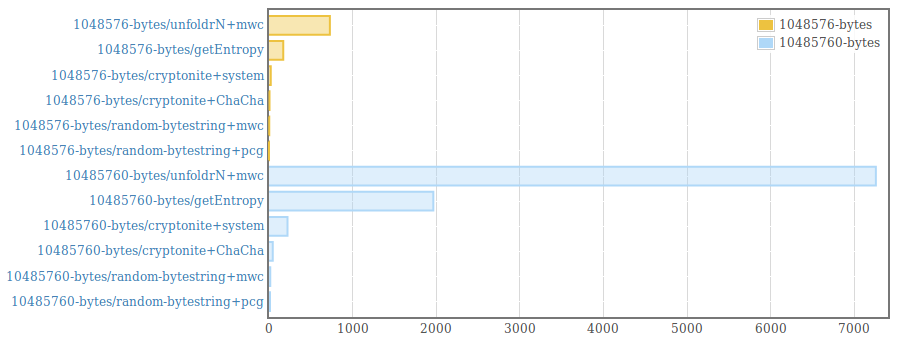 . 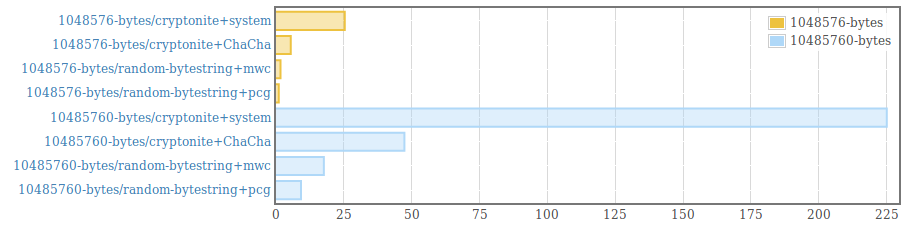
The Importance Index (I.I.) can determine the loss and solution sources for a system in certain knowledge areas (e.g., agronomy), when production (e.g., fruits) is known (Demolin-Leite, 2021). Events (e.g., agricultural pest) can have different magnitudes (numerical measurements), frequencies, and distributions (aggregate, random, or regular) of event occurrence, and I.I. bases in this triplet (Demolin-Leite, 2021) <https://cjascience.com/index.php/CJAS/article/view/1009/1319>. Usually, the higher the magnitude and frequency of aggregated distribution, the greater the problem or the solution (e.g., natural enemies versus pests) for the system (Demolin-Leite, 2021). However, the final production of the system is not always known or is difficult to determine (e.g., degraded area recovery). A derivation of the I.I. is the percentage of Importance Index-Production Unknown (% I.I.-PU) that can detect the loss or solution sources, when production is unknown for the system (Demolin-Leite, 2024) <DOI:10.1590/1519-6984.253218>.
This package provides methods for model-based clustering of multinomial counts under the presence of covariates using mixtures of multinomial logit models, as implemented in Papastamoulis (2023) <DOI:10.1007/s11634-023-00547-5>. These models are estimated under a frequentist as well as a Bayesian setup using the Expectation-Maximization algorithm and Markov chain Monte Carlo sampling (MCMC), respectively. The (unknown) number of clusters is selected according to the Integrated Completed Likelihood criterion (for the frequentist model), and estimating the number of non-empty components using overfitting mixture models after imposing suitable sparse prior assumptions on the mixing proportions (in the Bayesian case), see Rousseau and Mengersen (2011) <DOI:10.1111/j.1467-9868.2011.00781.x>. In the latter case, various MCMC chains run in parallel and are allowed to switch states. The final MCMC output is suitably post-processed in order to undo label switching using the Equivalence Classes Representatives (ECR) algorithm, as described in Papastamoulis (2016) <DOI:10.18637/jss.v069.c01>.
This package performs estimation and inference on a partially missing target outcome (e.g. gene expression in an inaccessible tissue) while borrowing information from a correlated surrogate outcome (e.g. gene expression in an accessible tissue). Rather than regarding the surrogate outcome as a proxy for the target outcome, this package jointly models the target and surrogate outcomes within a bivariate regression framework. Unobserved values of either outcome are treated as missing data. In contrast to imputation-based inference, no assumptions are required regarding the relationship between the target and surrogate outcomes. Estimation in the presence of bilateral outcome missingness is performed via an expectation conditional maximization either algorithm. In the case of unilateral target missingness, estimation is performed using an accelerated least squares procedure. A flexible association test is provided for evaluating hypotheses about the target regression parameters. For additional details, see: McCaw ZR, Gaynor SM, Sun R, Lin X: "Leveraging a surrogate outcome to improve inference on a partially missing target outcome" <doi:10.1111/biom.13629>.
Derivation tree operations are needed for implementing grammar-based genetic programming and grammatical evolution: Generating a random derivation trees of a context-free grammar of bounded depth, decoding a derivation tree, choosing a random node in a derivation tree, extracting a tree whose root is a specified node, and inserting a subtree into a derivation tree at a specified node. These operations are necessary for the initialization and for decoders of a random population of programs, as well as for implementing crossover and mutation operators. Depth-bounds are guaranteed by switching to a grammar without recursive production rules. For executing the examples, the package BNF is needed. The basic tree operations for generating, extracting, and inserting derivation trees as well as the conditions for guaranteeing complete derivation trees have been presented in Geyer-Schulz (1997, ISBN:978-3-7908-0830-X). The use of random integer vectors for the generation of derivation trees has been introduced in Ryan, C., Collins, J. J., and O'Neill, M. (1998) <doi:10.1007/BFb0055930> for grammatical evolution.
Augmented randomized complete block designs (augmented RCBDs) are useful for researchers to evaluate large numbers of unreplicated test entries with limited replicated checks. This R and Shiny'-based statistical package provides methods for the analysis of augmented randomized complete block designs (augmented RCBDs) across multiple environments. The package performs environment-wise augmented RCBD analysis and pooled analysis across environments, including analysis of variance (ANOVA), testing for homogeneity of error variances across environments, adjusted treatment means, treatment sum-of-squares partitioning, standard error of the mean (SEM), critical difference (CD), and treatment ranking. For pooled analysis, environment-specific error variances are assessed for homogeneity and used for appropriate transformation where required, followed by a general linear model incorporating environment, block nested within environment, treatment, and environment x treatment interaction. This Shiny interface provides a user-friendly platform that enables researchers and plant breeders to perform these analyses without requiring extensive programming knowledge. For method details see, Federer, W. T. (1961) <doi:10.2307/2527837>. It consists of the function augmentedPooledRCBD() which launches the application interface.